• Work
  • About
  • News
Menu

Emily Hilliard

Folklorist | Writer | Media Producer
  • Work
  • About
  • News

Writing Clips

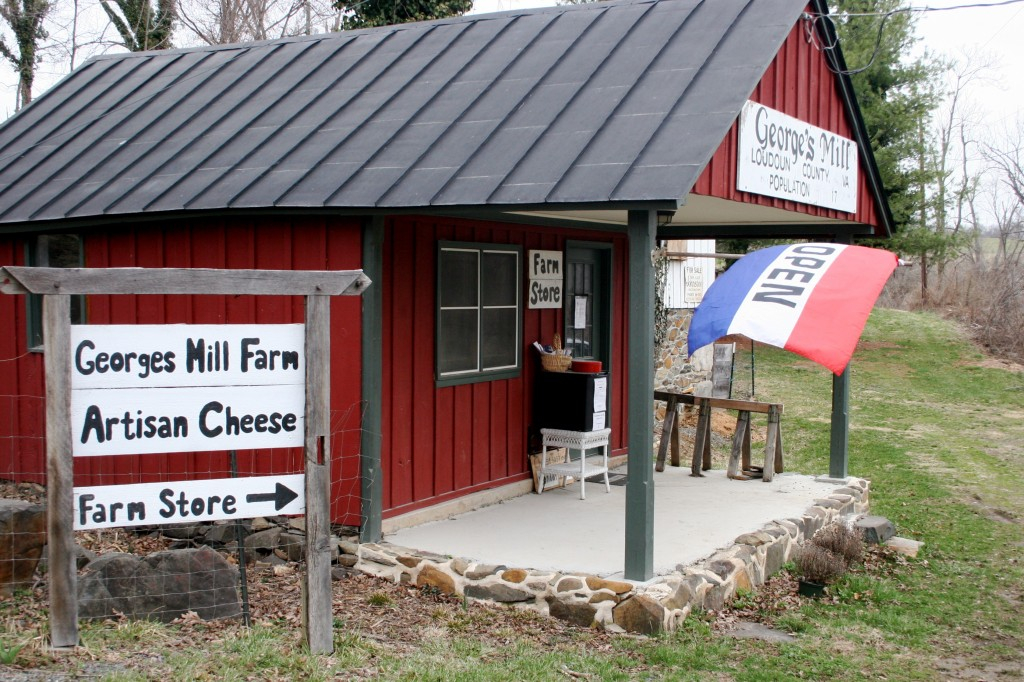
The Goat Cheeses of Georges Mill Farm →

July 9, 2014

Along the back roads of Loudon County, en route to Georges Mill Farm in Lovettsville, Virginia, there are signs that you’re still within striking distance of a major metropolitan area, as newer homes and development extend their reach among the rolling farms with old barns and white farmhouses.

But as you finally round the corner of Georges Farm Road and spot the Civil War–era stone house and the quaint barn-red Georges Mill Farm stand, you feel as if you’ve entered a landscape all its own, a historic haven very separate from the new growth in the county.

Read on in Edible DC
 

In Agriculture, Food, Photography, Recipes

Something Good from Helvetia →

April 11, 2014

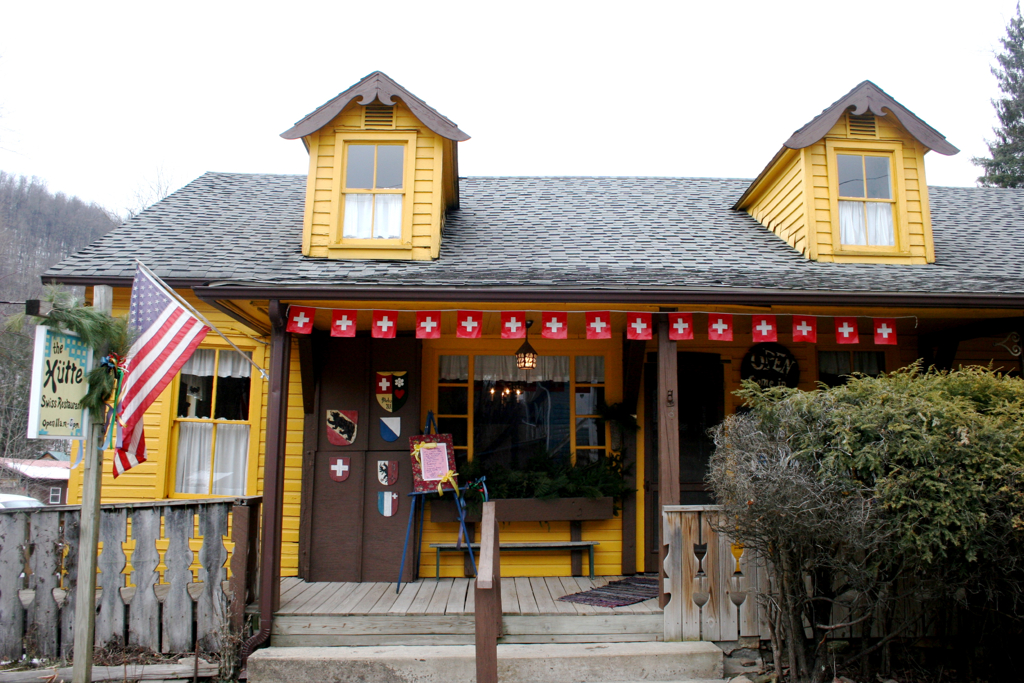
Helvetia, West Virginia, is not a town you can just happen upon. About 30 miles south of Buckhannon and 40 miles southwest of Elkins (you know where those are, right?), the journey to Helvetia is a long and winding mountainous route up County Route 46. Even when you get there, it would be easy to blow right through town, were it not for the Swiss Alpine–style buildings peppered along the roadside.

The village was settled in 1869 by Swiss immigrants, many of them craftsmen, who had immigrated to Brooklyn, New York, during the Civil War. In Brooklyn, they formed a society of Swiss and German speakers called the Gruetli Verein, and together sought a place where they could live freely and practice their respective art forms. One of their members had done some surveying in West Virginia and spoke of the large tracts of land, beautiful mountains, and plentiful forests of game. The group eventually found cheap land for sale in the area and decided to establish a village, calling it Helvetia, the Latin name for Switzerland.

Read on in Gravy


In Folklore, Food, History, Photography, SFA

Fat Tuesday: The Many Different Doughnuts Of Mardi Gras →

February 26, 2014

The history of doughnuts is intrinsically linked to the celebration of Mardi Gras. "Fat Tuesday" — the Christian day of revelry and indulgence before the austere season of Lent — features dough deep-fried in fat as its main staple.

Among the first foods to be deep-fried were Roman scriblita, a precursor to today's doughnuts and fritters. Originating in the medieval era, most Christian European traditions have developed a version of fried dough for Shrove Tuesday (another name for the day before Lent starts). The rich treats presented a way to use up all of the butter, sugar and fat in the house prior to the self-denying diets of Lent. Traditionally it was an opportunity for indulgence, a day when, once a year, communities would go through the labor-intensive and expensive process of deep-frying in order to partake in a luxurious treat.

Read on via NPR

In Folklore, Food, History, Photography, NPR, Recipes
Map by Elizabeth Graeber

Map by Elizabeth Graeber

24 Hours in D.C. with Emily Hilliard, Morgan Hungerford West, and Elizabeth Graeber →

February 11, 2014

D.C. is a unique city that has always navigated having both a national and local identity. Because of all the government and national organizations that are based here, it is also a highly transient city, and one that is swiftly evolving. The D.C. of 5 years ago looks drastically different than it does today. What’s consistently been at the root of the local D.C. culture though, from punk to riot girls to go-go, is a steadfast commitment to the homegrown and independently owned, and that value is only growing stronger. Artists are beginning to stay local instead of moving to New York, folks are starting small-batch food companies, and the DIY culture is as strong as ever. Another thing we all love about D.C. is that it’s a small city with all the benefits of a big city. This means for creatives like us that the artistic community is small and welcoming. This also means that there’s a lot to see and do, but because of the compact size, it’s possible to tackle a lot in a day.

Read on in Design*Sponge


In Food, Travel Tags Design Sponge
40f7457db39b2a7b-gasstation-1.jpg

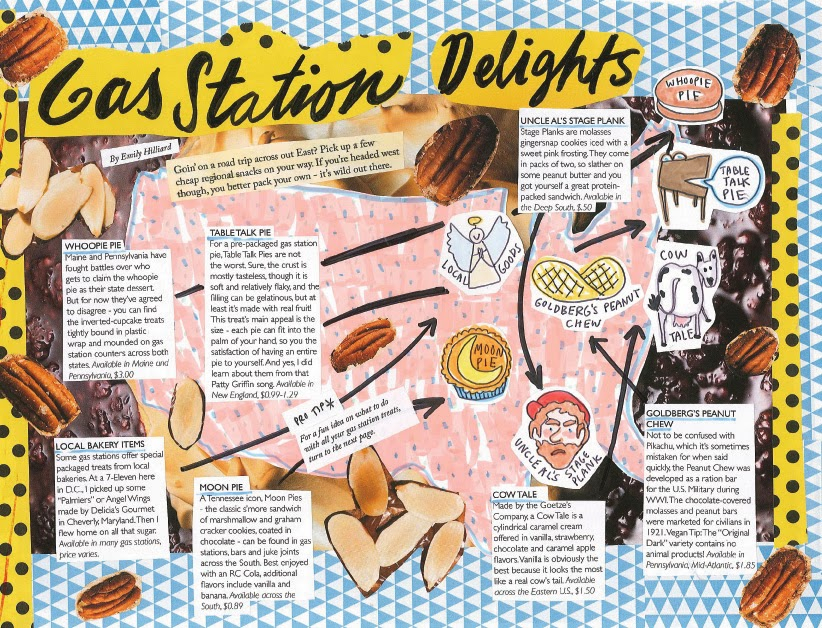
Gas Station Delights →

December 6, 2013

Goin’ on a road trip across out East? Pick up a few cheap regional snacks on your way. If you’re headed west though, you better pack your own—it’s wild out there.

Moon Pie

Region: Across the South

Price: $0.89

A Tennessee icon, Moon Pies—the classic s’more sandwich of marshmallow & graham cracker cookies, coated in chocolate-- can be found in gas stations, bars, and juke joints across the South. Best enjoyed with an RC Cola, additional flavors include vanilla and banana. Do Moon Pies only come as “Double Deckers” these days? OPEN QUESTION.

Read on in The Runcible Spoon

In Folklore, Food, History, Travel, Humor

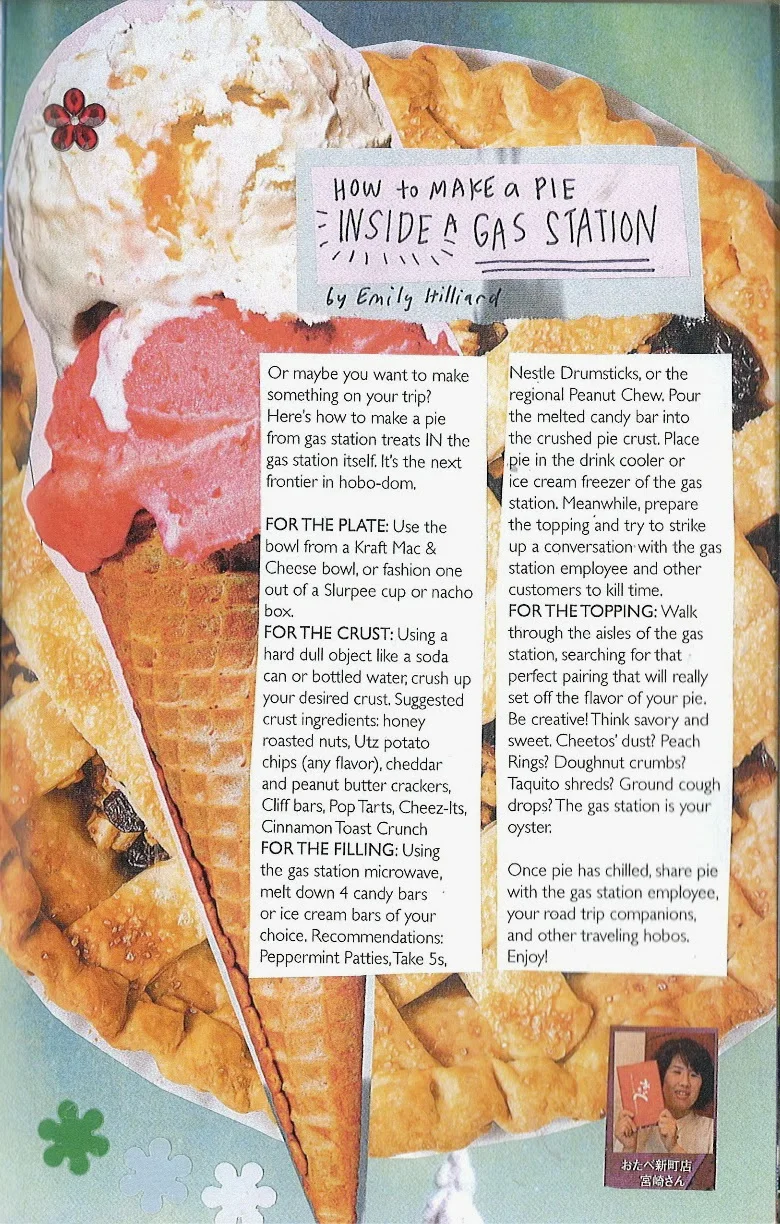
How to Make Pie *Inside* a Gas Station →

December 5, 2013

Or maybe you want to make something on your trip? Here’s how to make a pie from gas station treats IN the gas station itself. It’s the next frontier in hobo-dom.

For the plate: Use the bowl from a Macaroni Bowl, or fashion one out of a Slurpee cup or nacho box.

For the crust: Using a hard dull object like a soda can or bottled water, crush up your desired crust. Suggested crust ingredients: honey roasted nuts, Utz potato chips (any flavor), cheddar & peanut butter crackers, Cliff bars, Pop Tarts, Cheez-its, Cinnamon Toast Crunch.

Read on in The Runcible Spoon

In Food, Humor, Recipes, The Runcible Spoon

Get Freshly Minted This Holiday Season →

December 4, 2013

When I was growing up, my uncle Richard farmed mint. In the late summer, he and his crew would mow the mint fields like hay and collect the leaves in enclosed wagons, then drive them down to the still, where they would seal them and pump them full of steam. The steam caused the oil in the leaves to turn to vapor, which re-liquefied when pushed through a condenser.

I have memories of driving out to the farm when Richard was distilling that season's crop into oil, catching whiffs of the mint on the air miles before we arrived. Then we'd pile in the farm truck and head down the dirt roads to the still, the mint essence becoming stronger and stronger until we were finally lifted over the boiling vat for the most intense sensory experience. One inhalation of the mint oil completely cleared out our sinuses and must have prevented us from catching the cold through the winter — a special Indiana farm remedy.

Read on via NPR

In Folklore, Food, History, NPR, Photography, Recipes, Agriculture Tags NPR
Photo courtesy of St. Mary’s Armenian Apostolic Church

Photo courtesy of St. Mary’s Armenian Apostolic Church

Cheese Pies and Kebabs Keep Armenian Heritage Alive →

October 31, 2013

For 65 years, the St. Mary Armenian Apostolic Church has been holding The Armenian Fall Food Festival in the basement of their church in the Friendship Heights neighborhood of Washington, D.C. There in the serving line, women parish members dish out steaming lamb kebab, fresh tepsi boreg—phyllo dough stuffed with feta and mozzarella, and heaping ladles of hummus and eech—a vegetarian bulgur salad. In the next room, where patrons of all ages and backgrounds eat together at round tables, sits a long “bake table” filled with Armenian pasties including baklava, kataifi—shredded phyllo dough with sweet cheese or walnuts and simple syrup and haskanoush—a walnut roll topped with simple syrup.

Read on via American Food Roots

In Folklore, Food, History, Photography

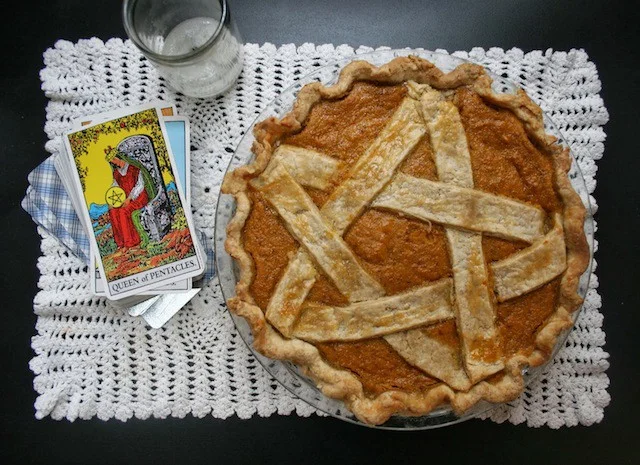
Fresh Out of the Coven: Pentagram Pie →

October 29, 2013

Pentagrams are an ancient symbol, but lately they’ve been popping up everywhere from forearms to TV shows to um…bikinis. I too seem to have been caught under the pentagram’s spell; I've recently developed an affinity for the encircled, five-pointed star.

The pentagram carries different spiritual meanings depending on the cultures in which it appears (from Mesopotamia to Freemasonry, Christianity to the occult), but in the Tarot, the "pentacles" correspond astrologically with Taurus, along with the other Earth signs Virgo and Capricorn. In general, the symbol is associated with Mother Earth, craft, the accumulation of knowledge, physicality, and tradition. It also represents stability, grounding forces, and feminine power—ever noticed the 5-pointed star on Wonder Woman’s projectile crown? And if those weren’t enough reasons to start brandishing a pentagram medallion, there's also the British folk-rock band Pentangle, one of my favorites, whose name comes from the Middle English poem Sir Gawain and the Green Night, and whose album covers sport some of the best pentagram designs I’ve seen.

Read on via The Hairpin

In Feminism, Food, History, Photography, Recipes, The Hairpin, Humor

Cobbled Together: American Fruit Desserts

August 7, 2013

Cobbler. I didn't understand the dessert until I understood the word.

A professional "cobbler" is often thought of as a shoemaker and repairman, but a truecobbler is only a mender of shoes. A cordwainer is the more masterful footwear maker.

A cordwainer would not want to be called a cobbler. And a delicately latticed pie would not want to be mistaken for the less artful dessert that's thrown or "cobbled" together with disparate bits of fruit and pastry, whether it's called a cobbler, crisp, crumble, pandowdy or buckle. Though a cobbler or crisp may not be as pretty as a fresh pie or a new shoe, the result is just as functional, enjoyable and more economical, at least in terms of time and effort.

Read on via NPR

In Folklore, Food, History, Photography, Recipes Tags NPR
← Newer Posts Older Posts →

Powered by Squarespace